The whole human body, from every angle.
Every bone, muscle, nerve, vessel and organ in 3D, named in English and Latin. Study it, dissect it and test yourself on it, right in your browser.
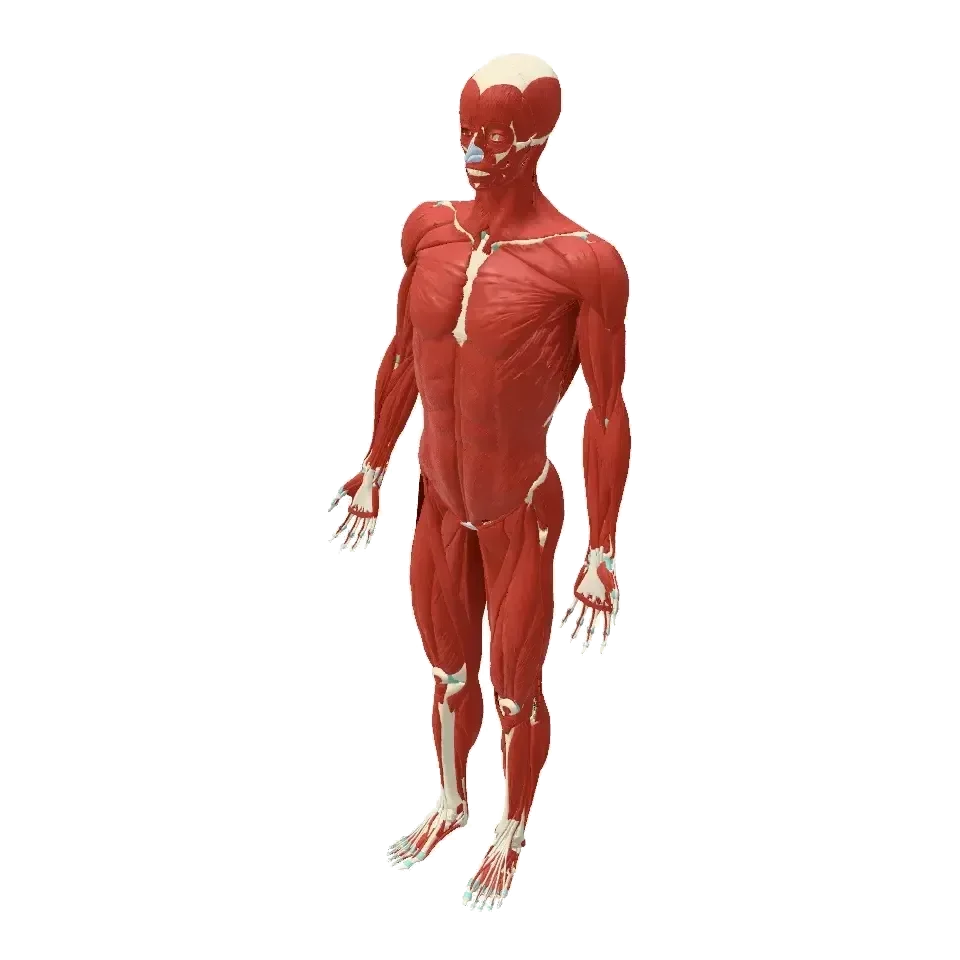
Everything the dissection room gives you once, any night you want.
On one complete body, and every step undoes.
Peel the body, layer by layer.
Hide the fascia, fade the muscles and see the nerves, vessels and organs beneath, on the same body in the same pose.

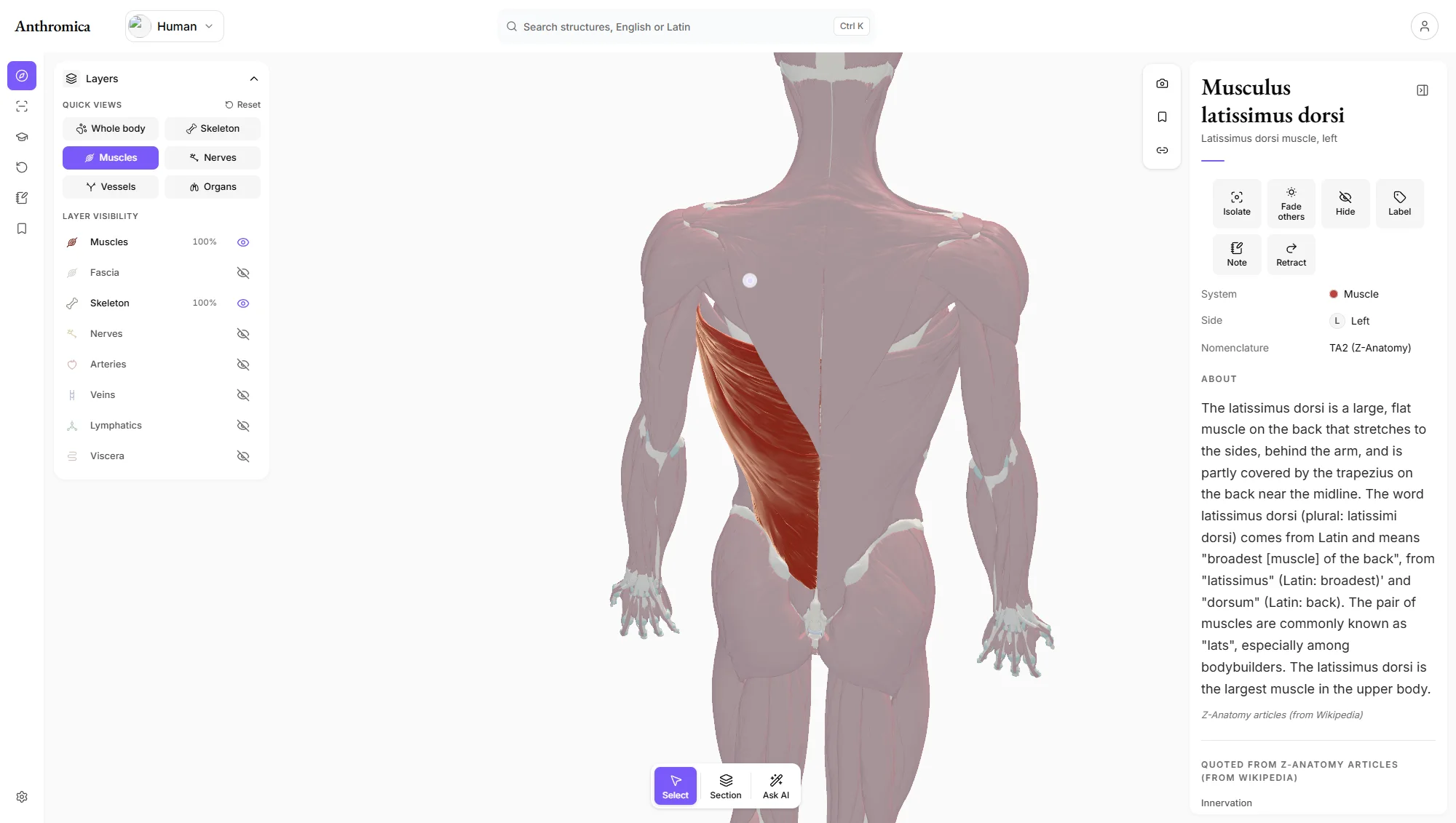
One body, every layer.
The skeleton and its joints, the muscles, tendons and fasciae, the brain, spinal cord and peripheral nerves, the arteries, veins and lymphatics, and the organs of the chest, abdomen and pelvis: all in one body, in one pose, so everything sits where it really lies.
Every structure is named to the Terminologia Anatomica, the international standard, beside its English name, and the names you search for work in either language.
What you can do with it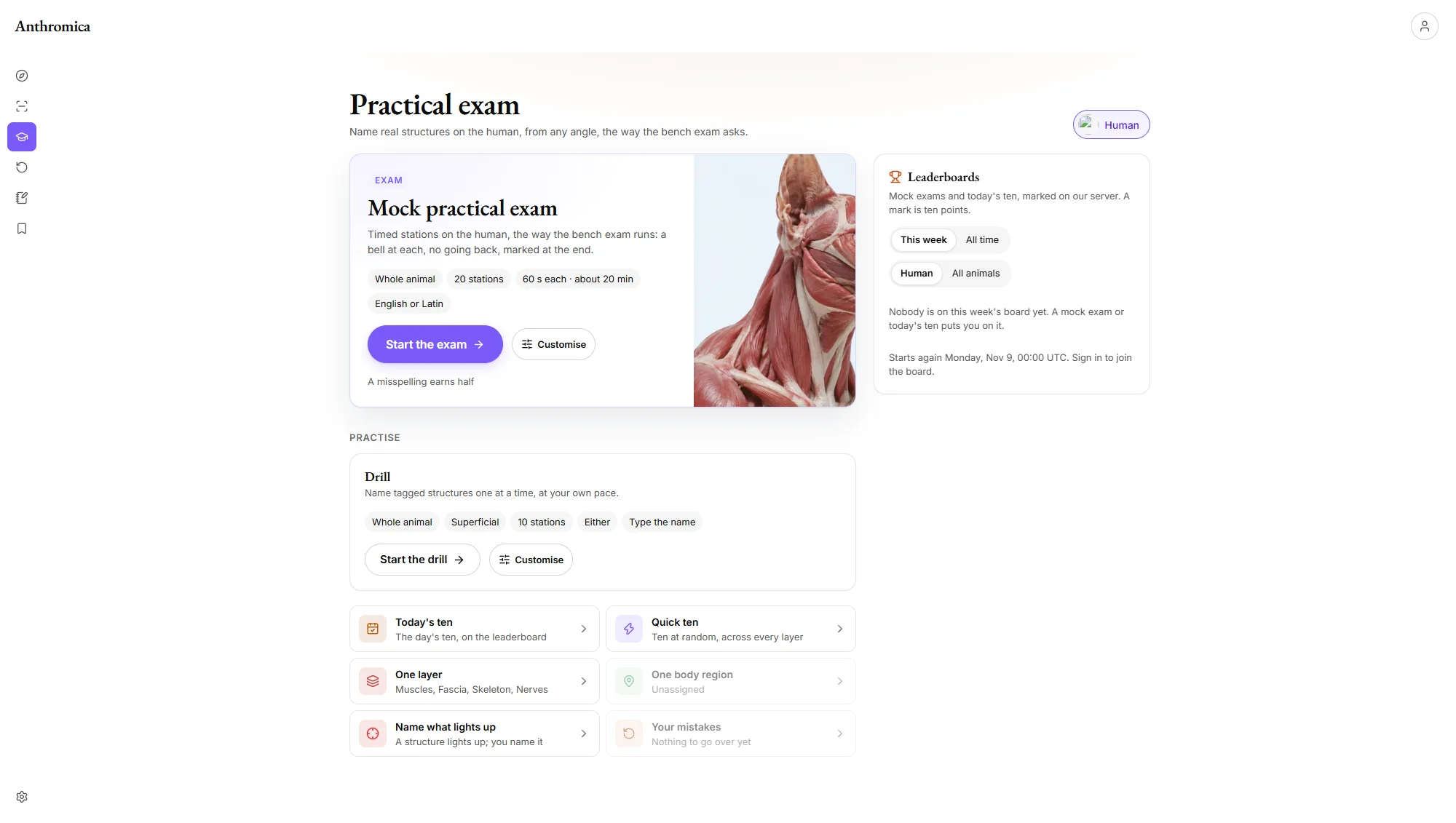
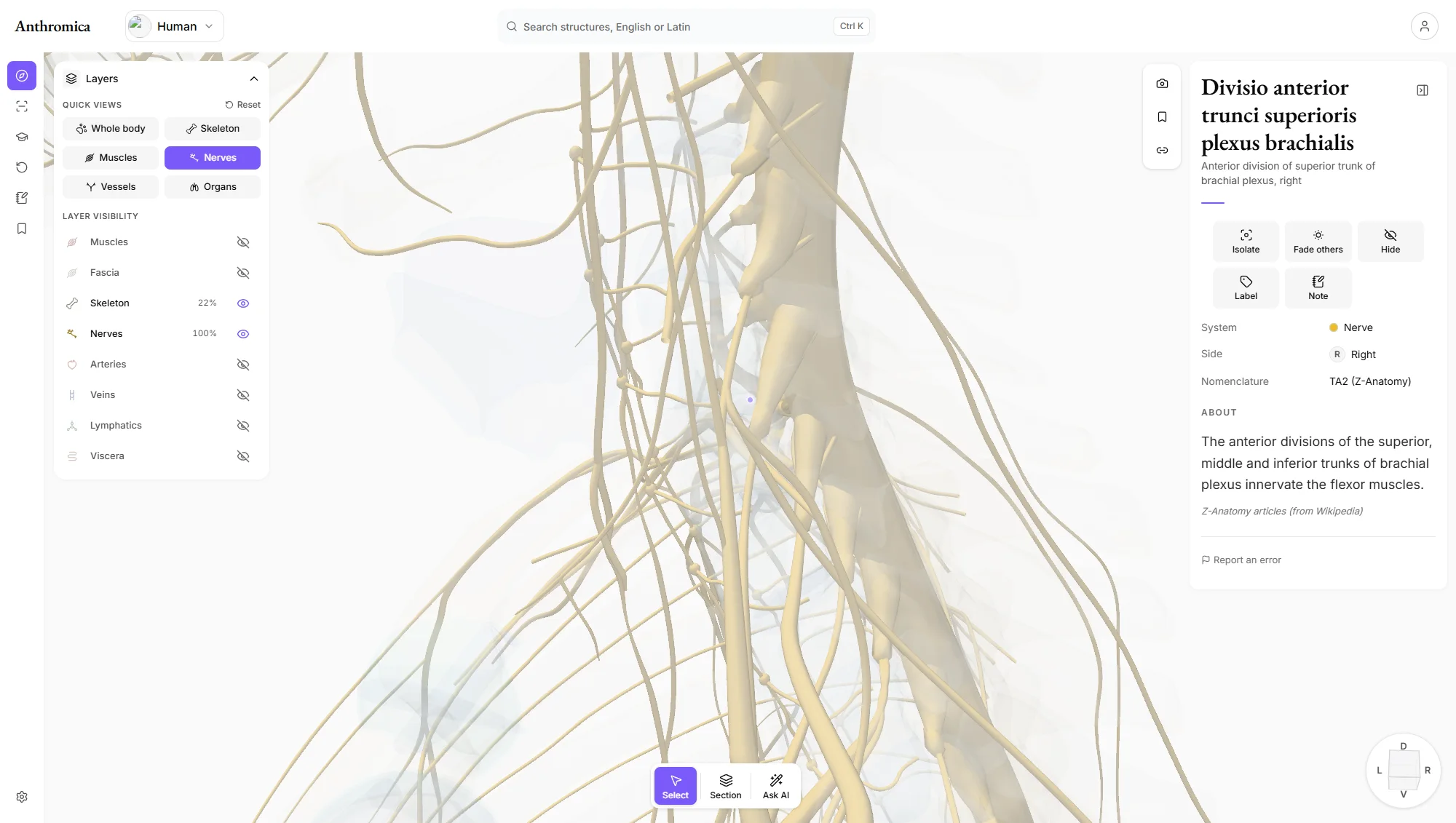
Opens in the browser you already have.
No installer and no licence tied to one machine. The first time you open the body it loads once, then opens straight away. Best on a laptop or a tablet; a phone works for a quick look, and your notes, saved views and progress follow your account everywhere.
Before you start.
What does it cost?
Every account is free, with no card: the whole body, every layer and every tool, up to a limit, your notes and saved views. Quizzes, drills and mock exams need a paid plan.
Student takes the limit away for your own study, with 50 AI tutor questions a day: $15 billed monthly, $39 billed every 3 months, or $144 billed yearly ($12 a month). Pro, for teachers, schools and clinicians, adds hosting live sessions, your own branding, professional and teaching use, and invoices: $49 billed monthly, $129 every 3 months, or $468 yearly ($39 a month). Each renews until you cancel. Prices are in US dollars, local tax included.
Where does the anatomy come from?
The body is Z-Anatomy, an open 3D atlas built on BodyParts3D, the human anatomy database of Japan's Database Center for Life Science, and named to the Terminologia Anatomica (2019), the international standard. Every structure carries its English name and its Latin term.
It is one adult male body, so it shows one individual rather than every variation. If you find something wrong, write to support@anthromica.com and we will look at it.
What is in the body?
The skeleton and its joints and ligaments, the muscles and their tendons and fasciae, the brain, spinal cord and peripheral nerves, the arteries, veins and lymphatics, and the organs of the chest, abdomen and pelvis, all in one body in one pose.
Will it run on my computer?
In any current browser on a laptop or a tablet, with nothing to install. The first time you open the body it loads once; after that it opens straight away.
A phone works for a quick look, but the full stage, with its tools and side panels, is easier on a bigger screen.
Is the AI tutor reliable?
It is a study aid, not a reference. It sees the structure you have selected and answers in plain words, and the names in its answers open the structure on the model so you can check them. Free has five tutor questions a day; Student and Pro have fifty.
Open the body tonight. Decide in a week.
The whole body, every layer and every tool, free up to a limit. No card, nothing to install.